


Hi All,
Did you know?
Most people assume heart trouble announces itself with crushing chest pain.
Often, it doesn’t.
It starts quietly.
A little more fatigue than usual.
Shortness of breath climbing stairs.
Cold feet. Heavy legs. Strange flutters. Less stamina. More effort for things that used to feel easy.
And because it happens slowly, many people write it off as “just getting older.”
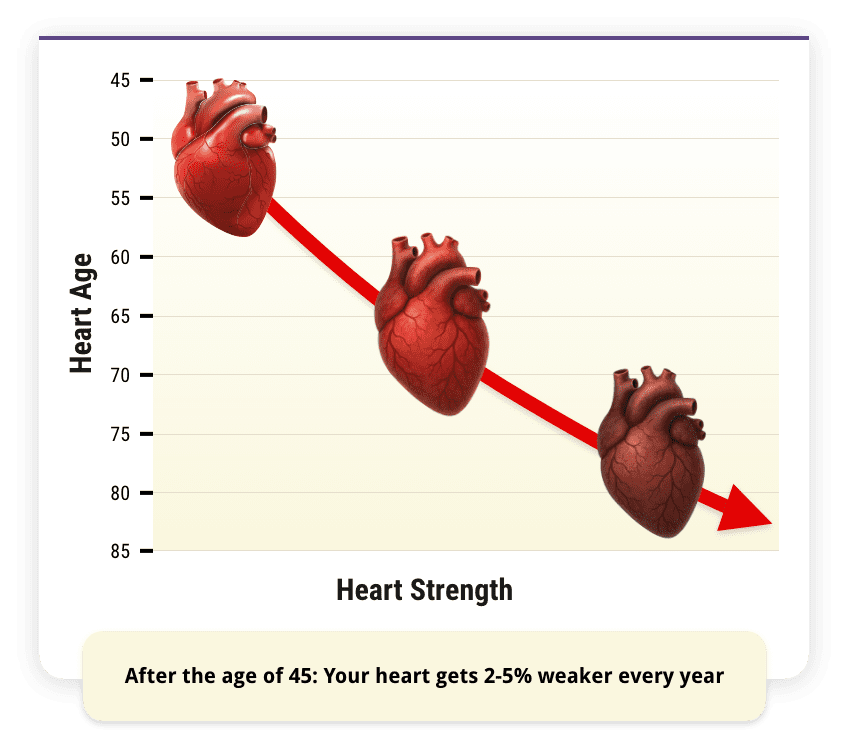
But what if those early changes are your first clue that your heart is losing strength?
Your heart is a muscle.
And just like any other muscle, it needs fuel, support, and energy to stay strong.
The difference is this:
Your legs can rest.
Your arms can rest.
Your heart never gets a break.
That’s why heart cells are packed with mitochondria — tiny energy engines that help power every beat.
And one of the most important compounds involved in that energy process is CoQ10.
Here’s why that matters.
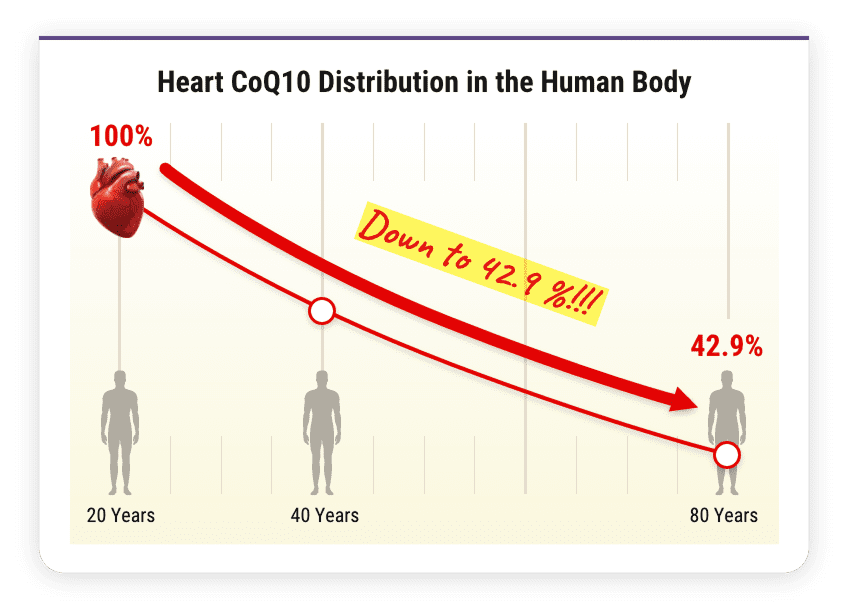
As people age, CoQ10 levels may decline.
And for millions of adults, especially those taking statins, levels may drop even more.
That means the very people most worried about their heart may be missing one of the key compounds tied to cellular heart energy.
So how do you know whether your body may be slipping?
Try this quick at-home check:
Take a deep breath.
Start your timer.
Hold it as long as comfortably possible.
If you struggle to make it to 45 seconds, it may be a sign your resilience is not where you want it to be.
That does not diagnose anything by itself.
But it may be your signal to pay closer attention.
Because the goal is not just to “watch your numbers.”
The goal is to support the muscle doing the work.
That’s why more people are turning to CoQ10-based heart support formulas — especially ones paired with complementary ingredients like magnesium taurate and reishi.

And there’s one more trick that makes people far more likely to stay consistent:
Attach it to something you already do every day.
That’s the entire “3-second before your shower” habit.
Put your heart-support routine where you will see it every morning.
Before the shower. Before the rush. Before the day takes over.
Simple. Automatic. Hard to skip doing this.
Because the biggest mistake most people make is waiting until they feel something dramatic.
Real decline is usually quieter than that.
It shows up in stamina first. Recovery first. Energy first.
The people who do best are often the ones who start supporting their heart before the crisis.
Not after.
If you’ve noticed you’re getting winded more easily, feeling older faster, or wondering whether your heart is as strong as it used to be, now may be the right time to look closer.
Sometimes the smartest move is not something extreme.
It’s a small daily habit you actually do >>>
And for many people, that starts three seconds before the shower.